
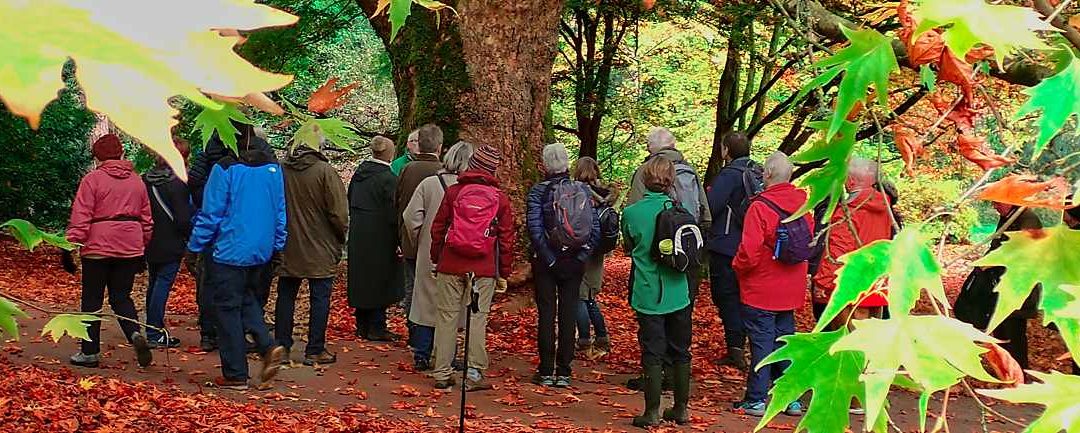
Above: Bath Nats members at Westonbirt © Alvan White
Leader: Alvan White
Eight members met for a guided walk and talk led by volunteers at Westonbirt, the National Arboretum, which contains examples of temperate rain forest and is a preserved landscape, with different habitat/environmental zones. It is loosely divided into The Old Arboretum containing specimen trees, The Downs area of grassland, and Silk Wood, which includes rides and coppiced woodland. The Old Arboretum was the site of the guided walk, which was fascinating.
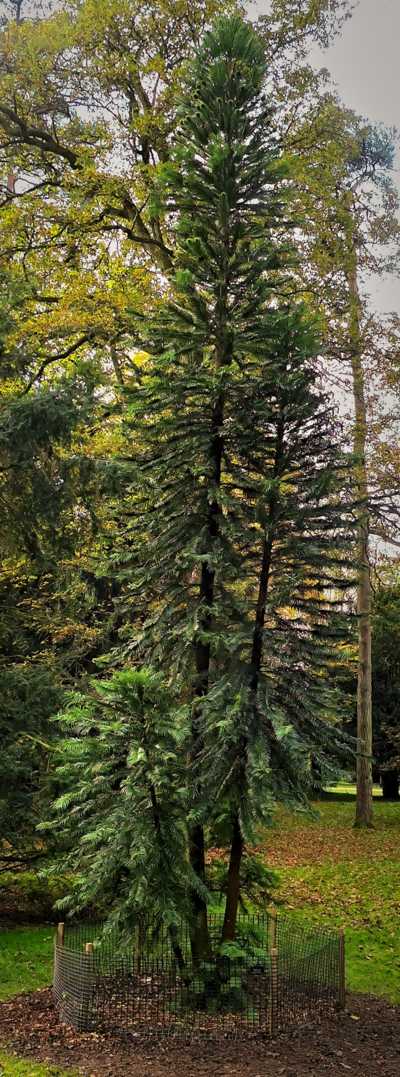
Wollemi Pine © Andrew Harrison
Robert Holford (1808-1892) was instrumental in setting up the tree collection. Trees were bought at registered sales, but Holford also financed plant collecting expeditions all over the world, on a quest to find the rare, the beautiful and the extraordinary, and the arboretum still contains many of the original plants brought back from these trips.
Rather than laying them out according to species or native geographic location, Holford planted his arboretum aesthetically. The result is that the botanical collection demonstrates an astonishing diversity, but also breathtaking beauty.
The colourful Acer species had mainly dropped their leaves: they were at their best during a reconnaissance visit on 23rd October.
We were shown a Wollemi Pine (Wollemia noblis), a species which dates back to the time of the dinosaurs in the Mesozoic era, but was considered to have been extinct for two million years, until plants were discovered in 1994 in the Blue Mountains of Australia.
We saw an impressive group of three Wellingtonias, or Giant Redwoods (Sequoiadendron giganteum) known as the Three Sisters. Planted in 1865, these are youngsters: the oldest known tree is between 3200 and 3266 years old! They are native to California, growing to heights of almost 95m in groves on the western slopes of the Sierra Nevada. The thick spongy bark is fire resistant as it does not contain resin. Seed is shed when cones dry out and shrink due to hot weather or fire. Fossils have been found in the Cretaceous (145-66 million years ago), in North America, Europe, and New Zealand and Australia.
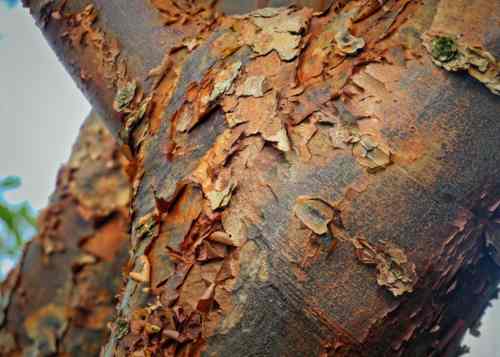
Paperbark Maple at Westonbirt © Andrew Harrison
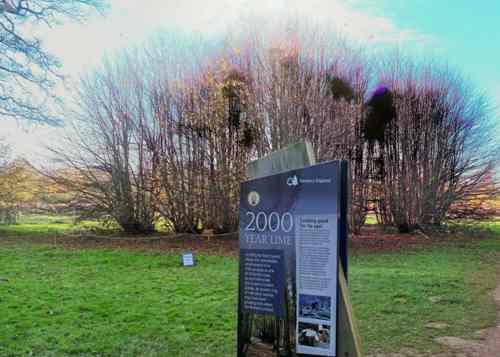
2000-year-old Small-leaved Lime © Andrew Harrison
A Paperbark Maple (Acer griseum) was resplendent in its autumn crimson and red leaves. This is a popular ornamental tree in Britain but an endangered tree in its native China, where the copper-coloured bark was used in traditional medicine to treat fever, rheumatism and skin conditions. Westonbirt has impressive native tress too: Silk Wood contains what is thought to be a 2000-year-old Small Leaved Lime (Tilia cordata), one of Britain’s oldest trees. Its longevity is the result of centuries of coppicing.
The main flush of fungi was over by November, nevertheless we did find a splendid example of the Magpie Inkcap (Coprinopsis picacea) and a Milk Cap species showing faint traces of the white latex type fluid emanating from its gills.
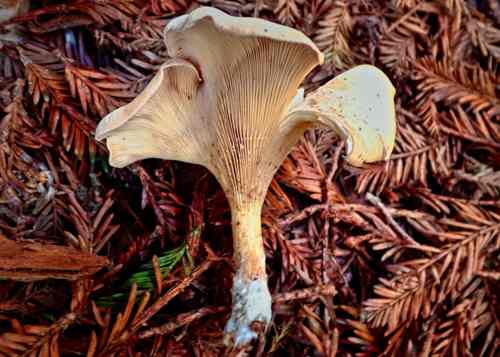
Milk Cap species at Westonbirt © Alvan White
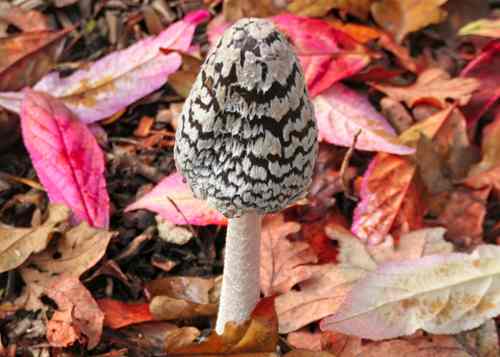
Magpie Inkcap at Westonbirt © Andrew Harrison
After lunch, we investigated the bird hide on the edge of The Old Arboretum. Here we encountered a selection of woodland birds including excellent views of Nuthatch and Coal Tit, attracted by the bird feeders.
During the walk around The Old Arboretum, we saw distant Redwings. Whilst walking through Silk Wood, Tom glimpsed a quick view of a bird of prey shooting low through the woodland. It was a very brief sighting, but Goshawks are known to be present on site.
Report by Andrew Harrison and Alvan White
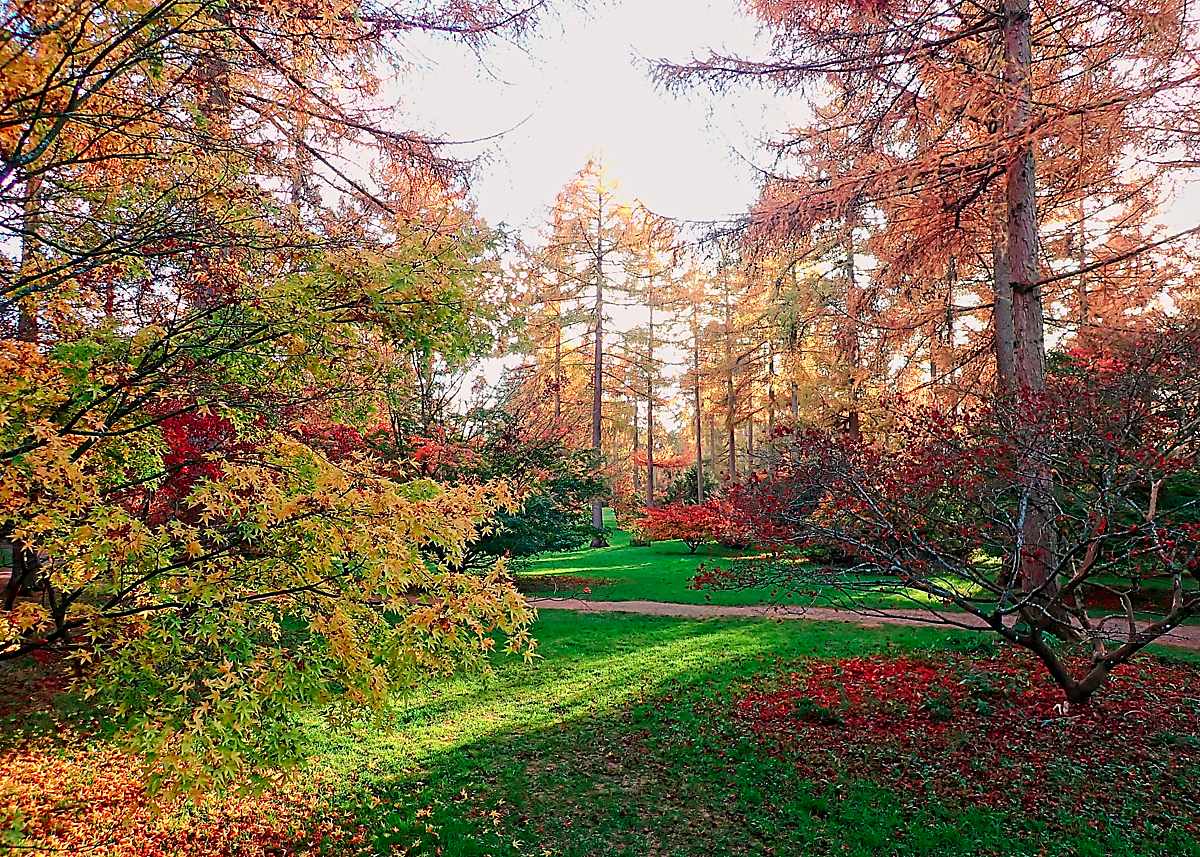
Westonbirt © Alvan White
Recent Comments