
Bath Natural History Society
BATH NATURAL HISTORY SOCIETY – Registered Charity No. 1107468
 Follow Bath Naturewatch on Facebook and Twitter
Welcome to our Bath Nats website from the President

Lucy Starling
Bath Nats (BNHS) has now been in existence for 84 years. Not every town or city benefits from having such a nature-based charitable society offering indoor lectures, workshops, and outdoor field activities covering a wide range of natural history. We encourage the study of birds, plants, invertebrates, mammals and fungi in and around Bath and further afield.
As a keen young novice, way back in 1970s, I joined BNHS with my father. I learned such a lot by attending lectures and going out in the company of “experts”, as everyone was at that time, according to me, a young schoolgirl who knew very little! But, I was a willing and attentive student and in due time, became confident enough to be able to lead a walk to look for birds.
Ornithology was definitely my first interest, having started looking at birds and listening to bird song at the age of around 6 years in Dorchester, Dorset. I moved to Bath with my parents and twin sister in 1969, aged 11, and joined BNHS in 1972. I also attended two different evening classes in Bath and Keynsham to further develop my knowledge of birds, their life histories and conservation and I joined the Young Ornithologist Club within The RSPB.
However, it was being a member of BNHS that really kick-started my interest and awareness of other fauna and flora, in particular butterflies, dragonflies, moths and flowering plants. And, at this time, I certainly had no thoughts I would ever have the honour of becoming President, which I did from January 2007 to January 2012 and again in 2025.
The birding landscape of Bath, indeed throughout much of the UK, has changed significantly in the last 50 years. We have witnessed declines and increases, departures and arrivals of species, likely driven by climate change and other environmental factors, habitat loss, increases in human population and the expansion of our towns and cities. Breeding Peregrines and Herring and Lesser Black-backed Gulls have adapted to reap the benefits of our urban built landscape. Watching a Red Fox patrolling streets at dusk is now quite commonplace. We all need somewhere to live and raise the next generation.
Bath’s topography has extraordinary built historic development interspersed with many green and blue spaces all within the UNESCO World Heritage Site. We have several public parks, limestone grassland and woodlands, including the National Trust’s Bath Skyline and Prior Park Gardens, the Kennet and Avon Canal and the River Avon. Residents and visitors could see a good variety of butterflies, dragonflies, birds and flowers during Spring and Summer. Do take a look at our reports of field outings on the website that will indicate the best places to go and when.
I was delighted to hear the news in June 2026 that, finally, the Government announced that, following a consultation, students will have the opportunity to study natural history. This would include a minimum of 20 hours fieldwork and it is expected that the new natural history GCSE would be taught in schools from September 2029. Consequently, the continued existence of BNHS is even more relevant to potentially enhance the study of habitats and wildlife, human influences on the natural world including climate, biodiversity and conservation in their local area.
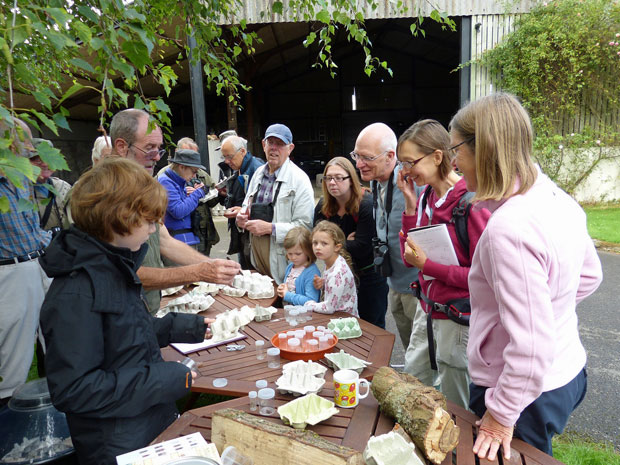
We run moth traps which are always a great way to introduce children, and indeed adults, to the wonders of the insect world and some of our outdoor meetings are suitable for the less mobile. We hope that there is something for everyone to enjoy, whatever age, be they a nature novice, or an established enthusiast.
Lucy Starling
President
About Us
Objectives
The main purposes of Bath Natural History Society are to promote an interest in all aspects of natural history and to encourage the study, conservation and recording of the fauna and flora of the Bath area. BNHS liaises with other natural history societies and conservation organisations.
Activities
• Field trips – usually two or more per month.
• Indoor meetings – monthly from October through to April.
• Survey work – site visits to record specific wildlife groups.
• Annual meeting and social on first Saturday of January
• Education – providing lecturers to speak to external organisations.
• Wildlife identification.
• Meetings to enable the public to participate in Nats’ activities.
Join in
If this sounds interesting to you, come and join us!
To download Constitution Council Members for 2026 SafeGuarding Policy Membership form
Take a walk with BathNats
When it’s not possible to join a field trip, explore nature round Bath with a self-guided walk. Lucy Starling is your guide.
How To Join Bath Nats
To join us, come along to one of our indoor meetings, email us or download an application form
A programme of our field trips is available to all members.
The annual subscription is as follows:
• Single membership…….. £8.00
• Family membership….. £12.00
• Student membership….. £4.00
You can download an application form to join us here
Admission for indoor meetings is £3 for members and visitors.
Admission to the AGM is free.
Study Groups
‘Study Groups’ (SGs) are intended to augment the main Field Programme by enabling members of the Society to enhance their knowledge and confidence in studying particular aspects of natural history and to encourage recording.
Their meetings are arranged and notified separately to their members by their respective leaders, as and when appropriate. Members who wish to join an SG are asked to contact the leader(s) of that group.
Current Study Groups are listed below. Click each study group name to expand and find out more, with detailed reports to download.
Biodiversity Study Group
The Biodiversity Study Group undertakes biodiversity surveys around the Bath area.
Ring Common Allotments
A bioblitz event was held at Ring Common allotments on 11 May 2025, led by Mike Williams. 36 plant species, 32 invertebrate species and 9 bird species were recorded. Of particular note was Slender Groundhopper. Suggestions for enhancements to the site are also given. Download Ring Common report
Claremont Road Allotments
A biolblitz event was held at Claremont Road allotments on 10 May 2025, led by Mike Williams and Helena Crouch. 101 plant species, 48 invertebrate species and 8 bird species were recorded. The most interesting species recorded was Henbit Dead-nettle. Suggestions for enhancements to the site are also given. Download Claremont Road report
Charlcombe Meadows 2024
A bioblitz event was held at Charlcombe Meadows (now called Charlcombe Community Nature Reserve) on 18 August 2024, led by Mike Williams, Alan Feest, and Alvan White. 60 plant species, 33 invertebrate species, 6 bird species and 1 amphibian species were recorded. The most interesting species recorded was Box Bug, a recent arrival in Bath. The fields were also noted to have an abundance of Red Bartsia. Download Charlcombe Meadows report (2024)
Charlcombe Meadows 2025
A bioblitz event was held at Charlcombe Meadows (now called Charlcombe Community Nature Reserve) on 15 June 2025, as part of the Festival of Nature programme. The event was led by Mike Williams and Helena Crouch. 118 plant species, 37 invertebrate species, 4 bird species and 1 amphibian species were recorded. Species of note included Downland Bee-fly and Small Tortoiseshell, a species that has declined considerably in recent years. Download Charlcombe Meadows report (2025)
Moths Study Group
For members with a special interest in moths and for those who would like to learn more. A programme of moth trapping is held at various venues, usually people’s gardens, circulated in advance and covering the period April to October. There are also many extra traps held at shorter notice, depending on weather and conditions. In season there is also an active email exchange of photos, comments, queries and information.
For those new to moth trapping, traps basically consist of a bright light to attract moths and a container inside which the moths settle on egg boxes. Traps are set up as darkness falls and many moth groups stay with the trap into the small hours to record the species which come to the light, either to enter the container or to fly off again. The Bath Nats approach is to leave the light and container overnight and open it the next morning, usually around 9.00 am.
Moths are then carefully removed for species identification and recording before being passed around for members present to see them. Once the moths have been examined and in some cases photographed, they are placed on nearby foliage so that they can fly off as and when they please.
Invertebrates Study Group
The Invertebrate Study Group aims to bring together BNHS members with a keen interest in our local invertebrates, focusing mainly on identification, surveying and recording. Moths are already covered by an existing group, so our priority will be all of the other invertebrates. The group will be relatively informal, with occasional field outings in and around the Bath area. Please note that collection of specimens is sometimes necessary for identification purposes – accurate identification is vital for the conservation of any species – although the decision to do this is entirely down to the individual. Photography is very much encouraged. Records of note recorded by the group will be included in the annual invertebrate report in the Bath Nats magazine.
Invertebrate Survey of Solsbury Hill
An extensive invertebrate survey of grassland habitat at Solsbury was undertaken by Mike Williams in 2024. 471 invertebrate species were recorded, including three beetle species that are probably firsts for North Somerset, as well as many other uncommon species, some of which have not previously been recorded in the Bath area. This is an exceptional site for invertebrates due to the unimproved species-rich grassland on the hillfort ramparts, and other features such as rock crevices and ant-hills. Historical data from the late 19th and early 20th centuries shows that there have been changes in the beetle fauna over the past century. Download Invertebrate Survey of Solsbury Hill
Nature round Bath
Learn more about the natural history of Bath in the first of a series of studies, including extracts from the Bath Natural History Society Magazine.
Priddy Mineries and Stockhill Woods, 7 October 2026
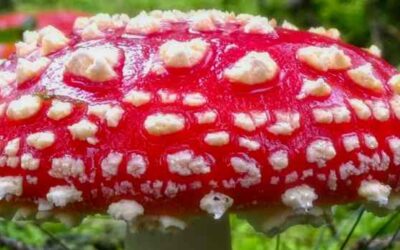
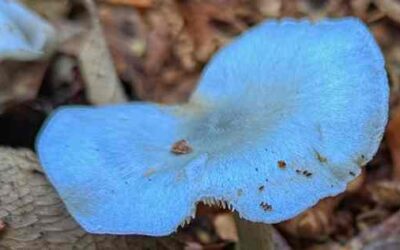
Above: Fly Agaric © Richard Bottle Leader: Glen Maddison I and six members assembled in the main car park at Stockhill Woods in conditions we had forgotten actually existed… rain! Unfortunately, it was not the odd shower as forecast, but the annoying and persistent...
Greyfield Wood, 23 September 2026
Above: Aniseed Funnel (Clitocybe odora) © Helena Crouch Leaders: Alan Rayner and Helena Crouch It was unseasonally mild as 16 of us assembled for a fungal foray in Greyfield Wood, near High Littleton. Greyfield Wood is owned by the Woodland Trust and has mixed geology...
Northend, 17 September 2026
Leader John RawlesAs I headed towards Eagle House, I noted fox standing confidently in the road in Northend – other members had also been busy and spotted a Red Kite and a House Martin before I arrived. The day was mild and sunny but, following the drought and...
Walk around Kilmersdon, Somerset, Wednesday 2nd September,2026
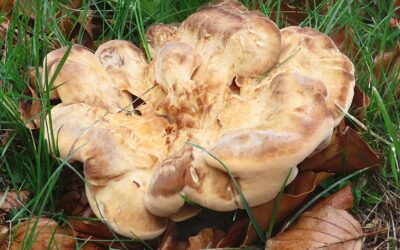
Above: Giant Polypore © Andrew Harrison Leader: Tom Rogers Thirteen members joined the leader in the rain at Kilmersdon Village Hall car park for an approx 4 mile walk starting in Kilmersdon and taking in parts of ‘The Colliers Way’ cycle track & fields close to...
Moths at the American Museum with Bath Nats, 31 August 2026
There was a good turnout of Nats members and public to see moths attracted by our125W mercury vapour light traps. As rain and strong winds were forecast overnight, the two traps were placed under cover of the entrance pagoda and kitchen veranda respectively. Although...
Bath Nats member in print
Former Bath Natural History Society secretary Dr Kate Souter has a chapter on Tree Sparrows included in a newly published book, In Rare Company - Uplifting encounters with Britain's struggling wildlife from a collective of nature enthusiasts from all corners of the...
Colerne, 19 August 2026
Leader: Karen Funnell After 51 days without rain, I awoke to signs of overnight rain and there was drizzle in the air. As someone later said, if the farmers need rain get Karen to lead a walk! By 10am, however, we were able to leave our waterproof coats in the cars...

Langford Lakes Wiltshire Wildlife Trust reserve, 9 August 2026
Above: Migrant Hawker © Phillip Delve Leader: Phillip Delve Langford Lakes Wiltshire Wildlife Trust Reserve lies on the River Wylye flood plain, some 12 miles north west of Salisbury. Seven of us met at the reserve car park where we were lucky to see a Marsh Tit ...

Alners Gorse, 2 August 2026
Above: Clouded Yellow © David Hall Leader: Glen Maddison I had co-led a visit for U3A with Tom Rogers to this site a few days earlier, and it was noted then that the reserve was very dry and cracked underfoot, and so it proved again on my return with Bath Nats.Eight...
Honeygar Farm and Shapwick Heath, 23 July 2026
Leader: Tom Rogers Ten of us met our leader, Tom, at the entrance to the new "rewilding" site at Honeygar Farm on the Somerset Levels. Jamie Kingscott, the only paid staff member at this newly formed wild space, was our guide on a warm, sunny day. He gave us a talk as...
National Links
- RSPB www.rspb.org.uk
- Natural England www.naturalengland.org.uk
- National Trust www.nationaltrust.org.uk
- Wildfowl & Wetlands Trust www.wwt.org.uk
- Butterfly Conservation www.butterfly-conservation.org
- British Dragonfly Society www.dragonflysoc.org.uk
- UK Moths www.ukmoths.org.uk
- Froglife www.froglife.org
- Wild About Britain www.wildaboutbritain.co.uk
- UK Butterflies www.ukbutterflies.co.uk
- The Great Crane Project www.thegreatcraneproject.org.uk
- Botanical Society of Britain & Ireland www.bsbi.org.uk
- British Trust for Ornithology (BTO) www.bto.org
Local Links
- Bath peregrines nest cam (Hawk & Owl Trust) hawkandowltrust.org/web-cam-live/bath-1
- RSPB Bath Local Group ww2.rspb.org.uk/groups/bath
- Avon Wildlife Trust www.avonwildlifetrust.org.uk
- Wiltshire Wildlife Trust www.wiltshirewildlife.org
- Somerset Wildlife Trust www.somersetwildlife.org
- Gloucester Wildlife Trust www.gloucestershirewildlifetrust.co.uk
- Cotswold Fungus Group www.cotswoldfungusgroup.com
- Bristol Regional Environmental Records Centre www.brerc.org.uk
- CVL Birding www.cvlbirding.co.uk
- Severnside Birds www.severnsidebirds.co.uk
- Somerset Birds www.somersetbirds.net
- Bristol Naturalists Society www.bristolnats.org.uk
- Bristol Ornithology Club www.boc-bristol.org.uk
- The Birds of South Gloucestershire www.thebirdsofsouthgloucestershire.co.uk
- Wiltshire Birds www.wiltshirebirds.co.uk
- Chew Valley Ringing Station www.chewvalleyringingstation.co.uk
- Elm Farm www.elm-farm.com
- Blagdon Lake Birds www.blagdonlakebirds.com
- Somerset Rare Plants Group www.somersetrareplantsgroup.org.uk
Get In Touch!
Please use the contact form here
BATH NATURAL HISTORY SOCIETY
Registered Charity No. 1107468
In memoriam
Tributes to past members
John Garrett 1952 - 2026
John Garrett
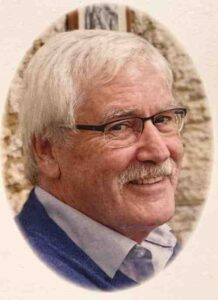
John Garrett was Treasurer of Bath Natural History Society from 2009 to 2026. He died after a short illness on 22 July aged 73. His long service to Bath Nats ensured that its finances were admirably managed and the society was always in good standing in regulatory and other official areas. John was an influential member of council and his sage advice will be much missed. He was an enthusiastic naturalist and much enjoyed photographing wildlife, especially birds. He frequently joined BNHS field trips and was generous in offering lifts to other members. He was also a regular supporter of the Bath branch of the Royal Society for the Protection of Birds and of natural history groups of U3A and enjoyed extended birding trips across the UK with friends. He leaves a very large gap at the heart of Bath Natural History Society.
Rob Randall 1948 - 2024
Rob Randall © Matt Williams
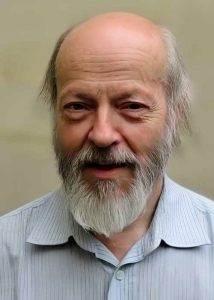
Rob Randall came to Bath as a student while the University of Bath was being built at Claverton. He worked in computing in Bath for many years and was also a highly respected naturalist. He served as a recorder for the Botanical Society of Britain and Ireland, and became a nationally recognised expert on the brambles of southern England. He supported Bath Natural History Society over many years as a leader of field trips, lecturer and council member, and was President from January 2022 till his death. He also devoted three decades as a volunteer for Bath Royal Literary and Scientific Institution in Queen Square where he built its database and indefatigably catalogued its collections of fossils, important natural history records dating back to early Victorian times, valuable books, historical artefacts and archives.
Rob was always willing to share with others his enthusiasm for and knowledge of the countryside around Bath, which was unrivalled. His generous, quiet, thoughtful, but always considerate presence will be widely missed.
A tribute to Rob Randall 1948-2024 by Professor David Goode, former President of BNHS
It came as a great shock for us to hear that Rob Randall has died. He has been a member of Bath Natural History Society for almost 50 years. That is more than half the life span of the society. He will be remembered by many of our members as an expert botanist. But he was much more than that. His friendship and encouragement has been treasured by many, and the Society itself has benefited enormously from his presence. He has, over the years, seen many changes. A succession of presidents and members of council have come and gone, and there have been many new innovations. If there have been conflicting opinions Rob, in his soft spoken way, has provided a sense of continuity, combined with words of wisdom. I believe he has been a veritable mainstay of the Society.
After joining in 1976 he quickly became a botanical recorder in the following year. Our report for 1977 tells us that Captain RGB Roe would continue to be the official record keeper for botany, but having moved away from Bath, “he will be assisted by Mr R Randall, to whom local records may be sent initially.” It was not clear what was meant by ‘initially’, but it was another 15 years before Rob was confirmed as the sole botanical recorder. He has in effect had that role for virtually the whole period of his membership.
Rob was elected to our Council in 1978 and was a member of the small committee planning the field programme for that year. This was a job that he enjoyed doing over many years as he built up his encyclopaedic knowledge of suitable places for us to visit. Rob’s enthusiasm for local botany was demonstrated when he gave a lecture about unusual flowers found in Bath. One of these was a rare species of speedwell from the Caucasus which he recorded in Batheaston. It was last recorded 50 years earlier and gave Rob great delight when he found it was still there.
It was always a great pleasure to join a field meeting led by Rob. That was how I first got to know him, on the slopes of Little Solsbury Hill. It was here that I first appreciated the depth of his botanical knowledge. Having identified a particular plant he would go on to explain how to distinguish it from its close relatives, assuming wrongly in my case that I would be familiar with some of these. One of the plants he recently discovered on these slopes was Wall Whitlow Grass, which had not been seen since the 1940s. Rob would lead several meetings every year, with a total of seven in one year. His lectures too were most enlightening. They included one on, “The history of studies of the Flora of Bath,” with reference to the collections held by the Bath Royal Literary and Scientific Institute. Another was called, “Reading the landscape,” emphasising the links between botany and geology. On taxonomic issues he explained the thorny problems of brambles and wild roses. He even ventured into the debate on, “What is a species?”
Rob was equally informed talking about the ecology of saltmarsh or the grasslands of the Cotswolds. He would also enthral everyone with his expansive knowledge during practical demonstrations of lesser-known groups of plants such as galls and lichens.
A Botanical tribute to Rob Randall by Helena Crouch, Secretary of BNHS
As a fellow botanist and Trustee of the Botanical Society of Britain & Ireland, I would just like to celebrate Rob’s huge contribution to British & Irish Botany.
Rob leaves a vast legacy of records as well as a large and significant herbarium of Bramble specimens.
He contributed many records to the Flora of Somerset, written by Captain Roe in 1981, over 40 years ago, and made over 30,000 records for the Flora of the Bristol Region, published in 2000.
Rob also contributed Bramble records to the Wiltshire Flora and the later Atlas Flora of Somerset.
In 2005 Rob became Joint Vice-County Recorder for VC6, North Somerset, with Ian Green. Ian had moved to Scotland and the following year Ian retired as VCR for N. Somerset and I joined Rob as joint Recorder for VC6. We were co-recorders for 10 years.
After that, Rob retired from the post to focus on his Bramble work.
Rob was a well-respected expert on Brambles and was latterly the Referee for Brambles of southern England. They were his major passion, although he was also an acknowledged expert on roses, leading walks and workshops on them as well.
And Rob was a brilliant all-round botanist. Since 2000 he made about 20,000 records, particularly around Bath, for the BSBI’s recent Plant Atlas 2020.
Rob had a discerning eye for interesting plants. In addition to his work on “critical” species, he often looked critically at common species. Last year he made a particular study of Red Dead-nettle – he and I were convinced that there are different varieties of these. We also shared a passion for street weeds, in Bath and beyond.
As David Goode has said, nobody knew the Bath flora as well as Rob did. He will be hugely missed in botanical circles as well as by all his friends in Bath.
David Ian Robertson 1943 - 2022
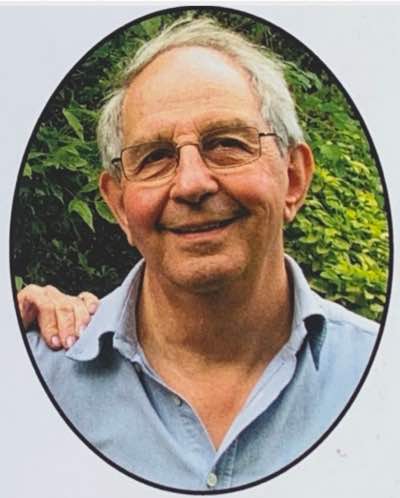
David Robertson
We were sad to lose BNHS member David Robertson in September 2022. David studied engineering at university and spent his working life as a civil engineer, including working on the Channel Tunnel. He even built his own house.
He had many and varied interests, including a love of nature. He was a keen bird watcher, both in the UK and around the world. For many years, he was a RSPB member, and made an important contribution both at local level, for almost nine years as Local Group Leader and nationally, as Group Volunteer Consultant.
David was a swift nestbox champion. He was instrumental in heading the first ever survey of breeding swifts in Bath and established close links with officers of BANES for the better protection of both swifts and other building-dependent birds. He sourced charitable funds that enabled over 100 swift nest boxes to be installed by Bath residents. He gave many talks to local schools and societies about the problems facing summer migrants.
David’s love of nature was also evident in his bee-keeping; his willingness to host moth traps for BNHS; his paintings, etchings and sculptures of birds and other wildlife.
David will be fondly remembered and appreciated for his calm, friendly and approachable character, as well as for his many skills. Many of us were pleased to be able to see him and his wife, Jan, at the BNHS 80th Anniversary Exhibition and drinks evening, in October 2021 at BRLSI.
Richard Pooley: President January 2002-January 2005
Richard Pooley © Lis Allen
Richard Pooley died on 30 April 2022, aged 83 years.
I got to know Richard while attending Bath Natural History Society indoor and outdoor meetings. My father and I sat next to him in the old Bath Technical College theatre and fell into conversation. Richard was very generous in sharing his knowledge with any person who, like him, had a deep interest in wildlife. He acted as a field trip leader on many occasions and showed his wildlife slides at the then annual Members’ Evening. With his wife Liz and three children, he lived in Meadow Park, above Batheaston, overlooking, in the distance, Brown’s Folly. Richard chaired The Somerset Trust for Nature Conservation from the time the Trust purchased the site and he later chaired the local group of Avon Wildlife Trust, acting as the main Warden for the reserve, taking part in many years of site management. Beyond attending Bath Nats meetings and events, I became part of a group of, primarily, birders, exploring various nature reserves, often in Dorset and Wiltshire, sometimes on a “twitch” which Richard invariably organised.
In the 1980s Richard’s work meant a move to Devon, and then to Portugal for a number of years before he returned to England and with Liz, set up home in Rudloe, near Corsham. Not unsurprisingly, Richard again became involved in the management of AWT Brown’s Folly, re-joined the Society in 2000 and became reacquainted with his Bath Nats fellow naturalists and members of the Bath and District RSPB Group which he also re-joined. Richard was honoured to be invited to become President at a time when the Society celebrated its 60th anniversary in 2002. During his Presidency, the Society established a website and Skills Improvement Groups were set up, in addition to the normal field programme, for the further study of fauna and flora including moths and moth trapping, which Richard, now an active member of Butterfly Conservation Wiltshire Branch, presided over for many years. Richard became very skilled at moth identification, including micro moths, trapping regularly at home and taking his trap to other locations in the Bath area, including Elm Farm. He also acted as Nats Moth Recorder, submitting his records including some significant species as well as verifying records submitted by other Society members.
Richard served three years as President, then acted as a Vice President and also for a time as Newsletter Editor. He regularly submitted records of birds, butterflies, dragonflies and plants he found the Bath Nats recording area and gave illustrated talks to the Society and other local organisations.
Our past magazines, most recently covering his last 22 years, are a testament to how much Richard actively supported the Society and his enjoyment of the natural world, both at home and abroad, and in very generously sharing his enthusiasm and knowledge with others. This he did until only some four months before he died, attending the moth group annual gathering in Compton Dando in February 2022, showing us photographs of moths and “mothers”.
Lucy Starling
President January 2008-January 2012
Professor Desmond Thomas Donovan 1921-2019
We are sad to learn that Professor Donovan died on 23rd December 2019 after a short illness. Members of the Society will know him as one of our Honorary Members. In fact he was one of the Founder Members of our Society in 1941 as an undergraduate studying Geology at the University of Bristol. He had a distinguished career as an academic geologist, first as a lecturer at the University of Bristol, then in 1962 Professor of Geology at the University of Hull, after which he became the Yates Goldsmid Professor of Geology at University College London from 1966 to 1982. After that he returned to the West Country and became Hon. Curator of the Wells Museum from 1982-85 and has lived in Wells since then. His main speciality has been in the field of palaeontology, particularly Jurassic cephalopods, a subject in which he made a massive contribution to our knowledge and understanding.
As one of his former students, I was pleased to receive a letter from him last year in which he congratulated the Bath Nats on our activities saying, “it seems to flourish and the annual magazine is excellent”. It was a nice tribute from a founder member after eighty years! He told me he was, “still doing some geology and had a couple of papers in preparation!”
The Society is greatly indebted to Professor Donovan for his foresight as one of our founder members.
David Goode
Alan Barrett 1937-2020
Our dear friend Alan Barrett died in February 2020 aged 82. Alan and Gillian joined the Society in about 1991 shortly after moving to Bath from Great Bookham in Surrey. Alan brought with him a considerable knowledge of birds, and a developing interest in insects. Gillian tells me that Jean Matthews, who was then Dragonfly Recorder, took him under her wing and he became very interested in dragonflies. Eventually he took over from Jean as Dragonfly Recorder for the Society. He gave several talks to the Bath Nats and led trips to help people identify dragonflies. One of Alan’s favourite places locally was the ox-bow wetland at Bathampton Meadows. He became the warden of the nature reserve run by the Avon Wildlife Trust and often took members of the Skills Improvement Group there.
Alan also became interested in Grasshoppers and Crickets and became the Recorder for these too. He went with Gillian on a residential course on Grasshoppers and Crickets at Kingcombe Field Study Centre in Dorset which stimulated his interest even further. All the records from the ‘SIGs’ were sent to BRERC in Bristol.
Over the years Alan has been central to the development of the Society. Whilst on Council he played an important part in writing the Constitution when we were about to become registered as a charity. All this was done in parallel with his other great interest which was birds. He has given enormous support to the Local Group of the RSPB in Bath over many years. In 1998 he became Indoor Meeting Secretary and in 2003 became Group Leader, a position that he held for ten years. Alan kept abreast of the changing fortunes of birds in Widcombe, and particularly in their own garden where Alan and Gillian have recorded nearly fifty species.
I shall always remember him as a great enthusiast, who was always willing to spend time explaining the detailed characters of a particular bush cricket or long-winged conehead. He had a great knack using a bat detector for identifying stridulating insects. But above all it was his welcoming friendliness that I shall miss.
David Goode
Tom Cairns 1949-2017
Tom Cairns 1949-2017
Ole Thomas Cairns was born on 8th June 1949 in Germany to his Norwegian mother and Northern Ireland-born father.
The family moved to Northern Ireland, then to Norfolk and later to Lower Swainswick, near Bath. It was in the local primary here that he gained his passionate love of nature and the countryside which stayed with him so strongly all his life.
After school he took a BSc Course at Bath, and became involved in conservation whilst working for the Bath Preservation Trust, saving a row of Georgian workers’ cottages from demolition by the less than enthusiastic City Council.
Return visits to Norway furthered his love of nature and he would go for solo walks out into the wild.
He took one of the first Master’s degrees in conservation and commuted from his house in Widcombe to Westminster where he advised the Government on the Wildlife and Countryside Act, a major piece of legislation. Other positions included project managing the Albert Dock in Liverpool whilst working for the Civic Trust.
Moving to Devizes he took up a post with Wiltshire Wildlife Trust, an organisation with which he became involved to the end, and where he made so many good friends.
He also worked for the Grazing Advisory Partnership based in Brinkworth, Wiltshire, organising a body including the Ministry of Defence, National Trust and Rare Breeds Survival Trust, the aim of which being the use of cattle native to the specific areas involved, to maintain the fragile ecosystem which was at risk from invasive or over-dominant species such as bracken. This is now standard practice.
In 2012, having taken up a new job in Lincolnshire, managing schemes to maintain salt marshes using native breeds, he collapsed at work and was rushed to hospital. Tests revealed that he had suffered a heart attack having contracted a disease of the heart muscle. The condition was so serious that he had to retire from work and return to his beloved Devizes. He fully recovered and made a point of enjoying life to the full.
In 2015, he was seriously injured in a road traffic accident and taken to Southmead Hospital, Bristol, where it was feared he would lose his leg. In a major operation the leg was saved.
Whilst recovering he suffered a severe flu-like illness; polymyalgia was diagnosed. Some months later tests showed that he had cancer, the illness from which he finally succumbed.
All the while Tom maintained his social life and was a great inspiration to friends and colleagues, who will continue to have happy memories of Tom.
Here are three such memories.
From Dave Green
In February 1978, Tom invited my heavily pregnant wife Ali and me to have a curry at his third-floor flat in Lansdown, Bath. We had known Tom by this time a couple years, and I knew he had photographed many flower species. Tom intended, after a leisurely meal, to show us slides of some of his flower pictures. However, as we ate, Ali was getting contractions, but didn’t say anything at the time, or when Tom and I got engrossed in the slideshow. Eventually she mentioned that contractions were coming at three-minute intervals, and perhaps we ought to go off to the hospital. This created a dilemma for Tom and me, because we were just getting to the slides of the frog orchid, which at that time I had never seen. Ali was insistent that we HAD to go, so Tom helpfully rattled through the slides at speed so that I could get a view of the plant before helping Ali shuffle down six flights of stairs. All went well and the following day the first visitor to the side of Ali’s bed was Tom with a bunch of flowers.
I have below included a photo that Tom took of the Ghost Orchid in 1978/9, one of the last times it was seen in Britain, my memory is of waiting by the car with Rob Randall until Tom ran out of film taking pictures whilst laid prone on the floor of Beech woodland, “somewhere in Southern England.
From Paul Derby
Tom had more jobs at the Wiltshire Wildlife Trust than anyone else that I can remember, often re-inventing himself to fit the job – another of Tom’s skills. He therefore had more ‘leaving dos’ than anyone else, with gifts of a new pullover on each occasion, as I recall, he was famous for his knitwear!
Tom’s wide knowledge of natural history was astounding. We would often be talking on a particular subject, when Tom would go off at a tangent about some related detail which I knew nothing about. It was always interesting and often humorous.
Tom had a vast collection of classic films on VHS, ‘I filled a room with those’ being a typical comment. He also had a complete (as far as I know) collection of first editions of the New Naturalists books. It was obvious that these gave him pleasure.
He was celebrated for his karaoke performances at parties (any excuse for a party was good enough for Tom, he knew how to enjoy himself!) His musical tastes were indeed wide and varied; many of the CDs I copied for him would be summarised by him as ‘really great, never heard them before’.
His sense of humour and fun go without saying. He often blamed me for influencing his sense of humour. He’d laugh at terrible jokes and make you feel a better person!
There are rumours of Tom’s love of cider… I never saw this, as whenever I had a drink (or two) with him, it was beer – real ale, of course. When we both lived in Devizes, we would regularly meet up in The Southgate, sit in the corner like two old codgers (which we were), and talk about anything and everything and put the world to rights. Tom always seemed to have his umbrella, whatever the weather!
From Rob Randall.
Tom had been a good friend since the 1970s. The exact date eludes me, but the occasion is cemented hard in my memory. I was out botanising in private quarry ground behind Brown’s Folly, probably looking for orchids: this was before it became a nature reserve.
I burst out of the bushes only to see a young man on hands and knees busy photographing a plant. He was also trespassing of course, so to save any embarrassment on his or my part I decided to go up and have a chat. I forget what he was looking at but I am sure the photographs were excellent. I think it was Tom who suggested I join Bath Nats.
Tom, Dave Green and I occasionally went on trips to see rare plants and I remember going to look for the Red Helleborine in a secret location on the Cotswolds. Although it was on a public right of way there was usually someone not far away guarding it. We all took our photos in time before the guard appeared and I am sure Tom’s were great but when I got home I discovered my film was stuck in the camera and I ripped it trying to extract it. Divine retribution perhaps.
Tom studied statistics while at university and I remember in those days Bath Chronicle had a quiz of some sort. Tom worked out how many entries he had to make to win and submitted them all whenever the quiz was published. After winning two times in a row, they thought perhaps he ought not to enter the competition again. Sounds a bit like what Bath council gets told if they win Britain in Bloom too many times.
We were regularly in touch from that point on and often went exploring (and sometimes trespassing) together until Tom took his job with the Civic Trust. I visited him a few times while he was based in London and occasionally after he moved to Devizes, especially while he was General Secretary for Bath Nats, but I missed those trips out to look for and photograph rarities.
Jane Fletcher 1932-2021
Jane Fletcher in the mid 1980s
Jane grew up on the edge of the North Yorkshire Moors where she developed a great love of nature. After training and working in Social Services for some years, she took a break and worked her way round the world, including South America, Nepal and Africa, taking various jobs as she went, including teaching English. She resumed her Social Service work on her return until her retirement but continued travelling to remote spots, such as Mongolia and the Middle East, on plant hunting holidays as well as visiting the many friends she had made, scattered across the continents.
Moving to Bath on retirement, Jane became loyal to several wildlife and musical societies as well as volunteering in museums and at Bath’s Botanical Gardens. Living alone, the Bath Natural History Society, the Hardy Plant Society and others were important to her. She often talked about the bird walks she’d had, mentioning her admiration for the birding fraternity, who knew and shared their knowledge while also being disciplined about keeping silent when birds were being watched!
Jane, a generous benefactor to BNHS, was always interested in others and was a good conversationalist, with a gentle sense of humour.