

Above: Dunnock Fledgling © Mike Williams
Leader: Mike Williams
A second bioblitz event in collaboration with the Bath Allotments Association was held at Ring Common Allotments in Victoria Park. This has been an allotment site since 1940. In the 19th Century it was pasture, and in the mid-18th Century there was a circular driveway for horse-riding, from which the name ‘Ring Common’ is derived.
There was a good turnout from the allotment plot-holders eager to discover the wildlife on their site. We began by looking at the plants growing under the trees in the south of the site, where we found Bush-vetch, Cowslip, Common Dog Violet and Cow Parsley.
Moving on to the eastern boundary at the back of Marlborough Buildings, Ivy-leaved Toadflax was growing on the walls, and Early Bumblebees were on Honeysuckle flowers and Hairy-footed Flower Bees on Common Comfrey flowers. Slender Groundhopper was noted here – usually a species of damp habitats, but I have found in abundance on Bath City Farm allotments so it was interesting to find them here also.
Around a compost bin were several species of woodlice, one of the snake millipedes, the synanthropic centipede Cryptops parisi, and Landhopper, a terrestrial shrimp from Australia. Male and female Black-striped Longhorn beetles were found on Cow Parsley flowers, and the Celery Fly Euleia heraclei. We also observed Black Ants ‘farming’ aphids on shrubs.
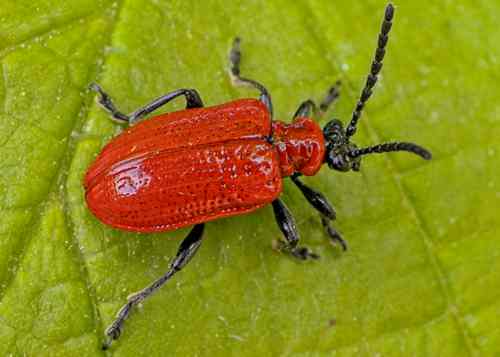
Lily Beetle © Mike Williams
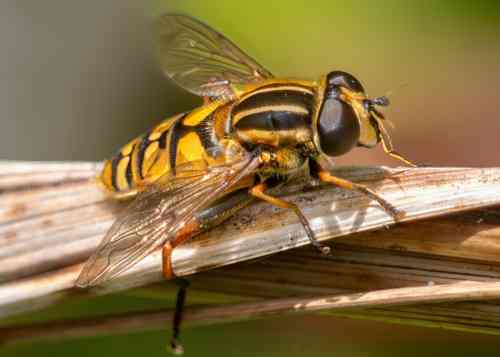
Footballer Hoverfly © Mike Williams
On a Hazel leaf amongst the plots was a Lily Beetle, which I initially mistook for the similar-looking Hazel Leaf-roller Weevil before examining it more closely. No lilies were noted nearby.
Hoverflies around the plots included the Narcissus Bulb-fly, Batman Hoverfly and a Footballer Hoverfly ready to breed and hanging around a small pond. A male Beautiful Demoiselle was also seen, and beetles included Thick-legged Flower Beetle, 7-Spot Ladybird, 14-spot Ladybird and Harlequin Ladybird.
Near the end of the walk we spotted a delightful fledgling Dunnock perched in a Laurel, which stayed watching us for several minutes. Other birds seen or heard included Robin, Wren, Wood Pigeon and Great Tit, and I talked at length about my observations on the complex lives and behaviours of our local Robins.
77 species were recorded in total, which is a fairly good figure considering that much time was spent talking to the plot-holders. While no rarities were found, the site has a reasonable diversity of species for an urban allotment site, and further serious survey efforts would likely record a much larger number of species.
The plot-holders seemed to enjoy the event, and will now hopefully be able to put a name to a few more of the animals and plants that they share their space with.
Mike Williams
Recent Comments