
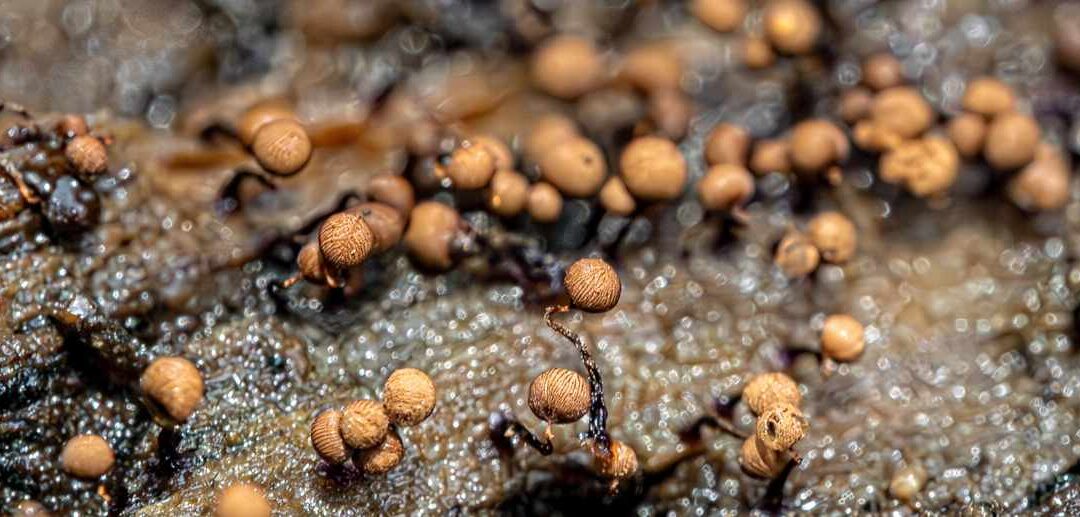
Above: Dictydium cancellatum, Entry Hill © Mike Williams
Leaders: Alvan White and Mike Williams
A heavy downpour in the morning put many participants off, however after a stint sheltering in the nearby café, the weather eased and cleared.
The recorded history of the site goes back to at least the 13th century when it was agricultural land under the name of Barracks Farm. The name is thought to be derived from the old English bere-wic, meaning barley-farm. Quarrying also took place, but the farm ceased in the 1960s. It was then used as landfill, which was filled in and a golf course was created. A now dry channel bisecting the site was also the source of the culverted River Lyn that flows in front of Prior Park Garden Centre.
Remnants of the golf course are still present, including the sand bunkers. The site is predominantly rough grassland with belts of trees. The list of tree species is relatively large and reads rather like an arboretum.
We started the walk by examining the Chinese Bramble at the rear of the cafe. This growth was fronted by Great Horsetail. Birch Polypore was also present on a Silver Birch stump near the café.
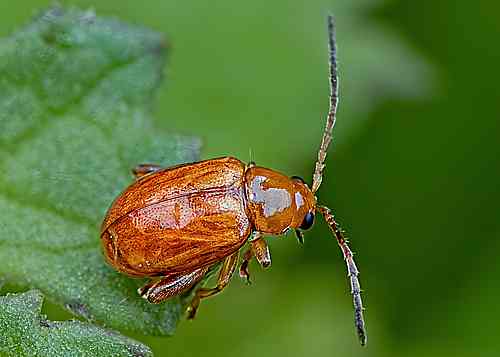
Longitarsus flavicornis © Mike Williams
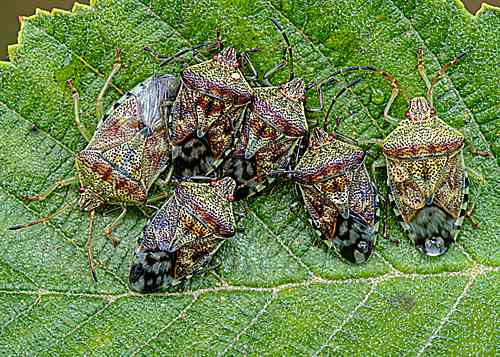
Parent Bugs © Mike Williams
Following on from the cafe we identified Aspen suckers, and Dogwood carrying masses of berries. We reached our first bunker, which was swarming with nesting Ivy Bees, a recent colonist first found in the UK in 2001. On the Common Ragwort growing in the bunker we found the flea beetle Longitarsus flavicornis.
On the numerous Alders we found an abundance of Parent Shieldbug adults and nymphs in large clusters on the leaves, and in a densely-wooded area the highlight was the colourful caterpillar of the Grey Dagger moth. On a log we found a slime mould that Alan Feest later identified as probably Dictydium cancellatum – a species he has never seen!
In a sand bunker near the bottom of the slope we encountered more nesting Ivy Bees, as well as flowering Fox-and-cubs and a Green-veined White. An examination of a nearby Walnut tree yielded the galls of the Walnut Blister Mite, and further up we encountered a Speckled Wood, 10-spot Ladybird and a female Common Darter. Alvan spotted a Rush Veneer moth, a migratory species from southern Europe and North Africa.
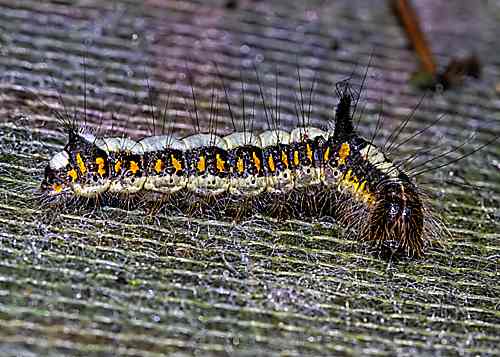
Grey Dagger caterpillar © Mike Williams

Bishops Mitre Shield Bug © Alvan White
Alvan visited on 4th and 6th September and amongst other things found a Mother Shipton moth caterpillar, Bishop’s Mitre Shieldbug, Southern Hawker and Long-winged Conehead. Mike returned on 12th September. Highlights included the bee Lasioglossum albipes, the hoverfly Dasysyrphus albostriatus, Lesser Stag Beetle and lots of Birch Catkin Bugs on the Silver Birches.
The site has a lot of potential and more species of interest might be present earlier in the year. The sand bunkers could yield some interesting bees and wasps, and the large number of tree and shrub species could have associated moths and fungi of note. The grassland has a lot of potential for enhancement, and with the right management this site could be teeming with interesting wildlife in the future.
Alvan White & Mike Williams
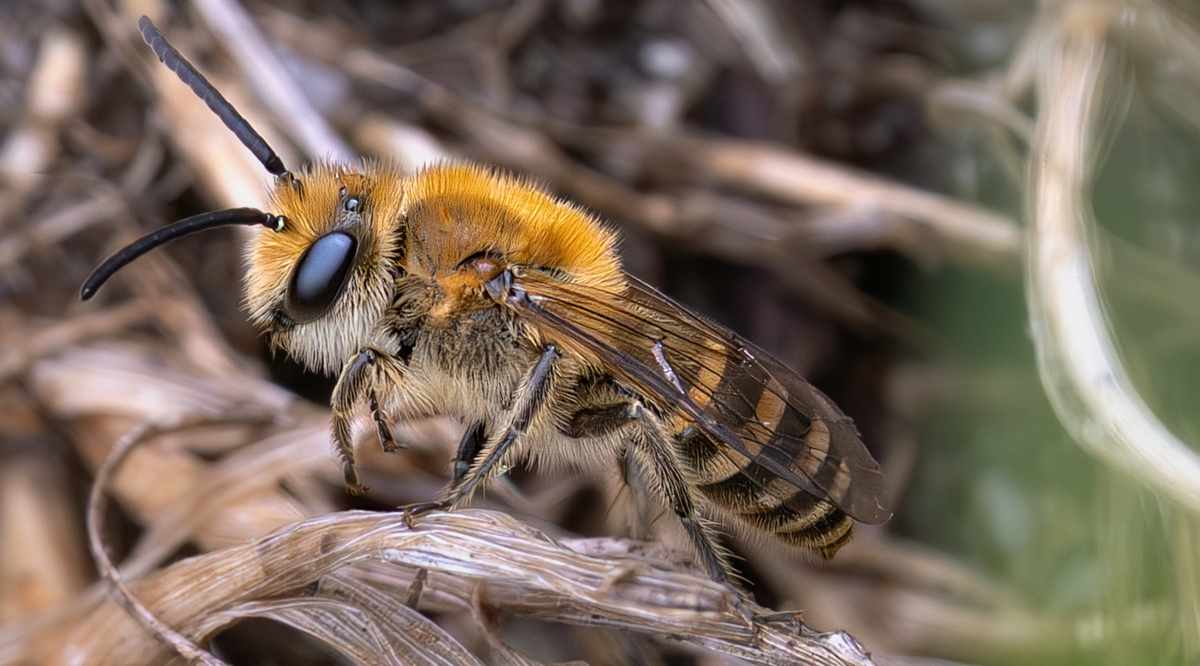
Ivy Bee © Mike Williams
Recent Comments