

Mint Moth © Mike Williams
Leaders: Mike Williams and Helena Crouch
The first of two bioblitz events in collaboration with Bath Allotments Association was held at Claremont Road allotments in Larkhall. It has been an allotment site since 1937. In the early 20th Century it was a nursery with two glasshouses and a fountain. In the mid-18th Century the site was recorded as pasture, and was part of a larger field that has since been built upon.
Several plot-holders and their families, as well as additional Bath Nats members, came along for the event. The first interesting botanical record was a flowering Crosswort, in a wildflower strip (likely seeded) also containing Wild Carrot, Ox-eye Daisy, Rough Chervil and Teasel.
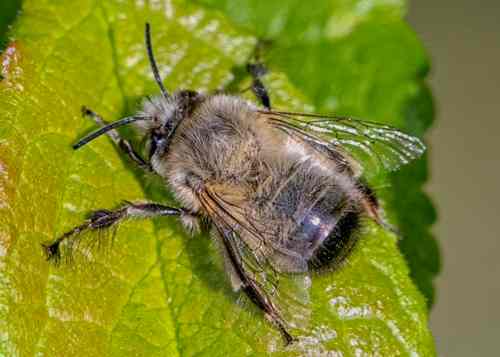
Hairy-footed Flower Bee © Mike Williams
This strip attracted several common pollinator species including Common Carder Bee, Honeybee, Hairy-footed Flower Bee, Marmalade Hoverfly and Bumblebee Hoverfly. Woundwort Shieldbug was found on a Hedge Woundwort here.
Screaming Swifts were flying overhead alongside House Martins. A Robin was seen carrying a big green caterpillar in its beak for either its mate or a young bird; other birds seen included Jackdaw, Magpie, Blackbird, Herring Gull and Wood Pigeon.
Moving on to the plots, butterfly highlights included Holly Blue, Red Admiral, Brimstone and Orange-tip, along with Cinnabar Moth and Mint Moth. American Winter-cress was noted in the north of the allotments and near the gate, which Helena suspected had originally been sown as Land-cress.
A Dark-edged Bee-fly was seen flying around the plots. Helena noted that quite a lot of the plant species present were common garden escapes, such as Red Valerian, Greater Celandine, Garden Grape-hyacinth, Green Alkanet, Winter Heliotrope, Pink-sorrel, Procumbent Yellow-sorrel, Mind-your-own-business and Feverfew. This isn’t too surprising given the modern and historical usage of the site, and the proximity to local gardens.
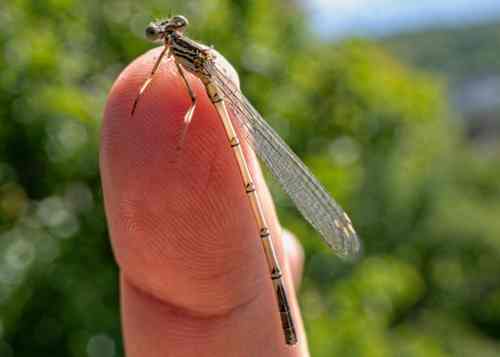
White-legged Damselfly © Mike Williams
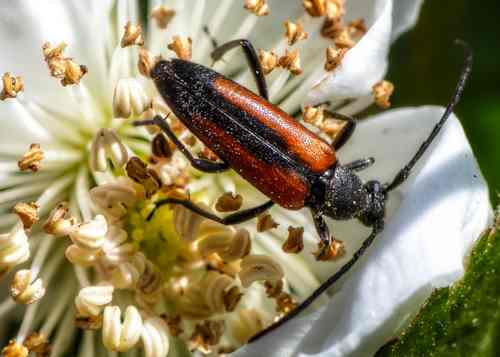
Black-striped Longhorn © Mike Williams
A search under objects on the ground revealed Black Ant and several species of woodlice, including the Ant Woodlouse Platyarthrus hoffmannseggii, associated with ant nests. Mike also caught a White-legged Damselfly, and the children present were enthralled by a Zebra Spider on a wooden bench. Beetles included Black-striped Longhorn, 7, 14-spot, 22-spot and Harlequin Ladybirds, and Mike explained the difference between the Thick-legged Flower Beetle and its close relative Oedemera lurida, both of which were present.

Henbit Dead-nettle © Helena Crouch
Following the event, the leaders and several other Bath Nats members stayed on for a couple of hours to record further species, largely focusing on plants. Helena explained the difference between the three species of bindweeds. The botanical highlight of the day was a Henbit Dead-nettle, an uncommon species in the Bath area.
158 species were recorded in total, including 101 plants, 48 invertebrates and 9 birds. An excellent figure for a single day on an urban allotment site.
Mike Williams and Helena Crouch
Recent Comments