
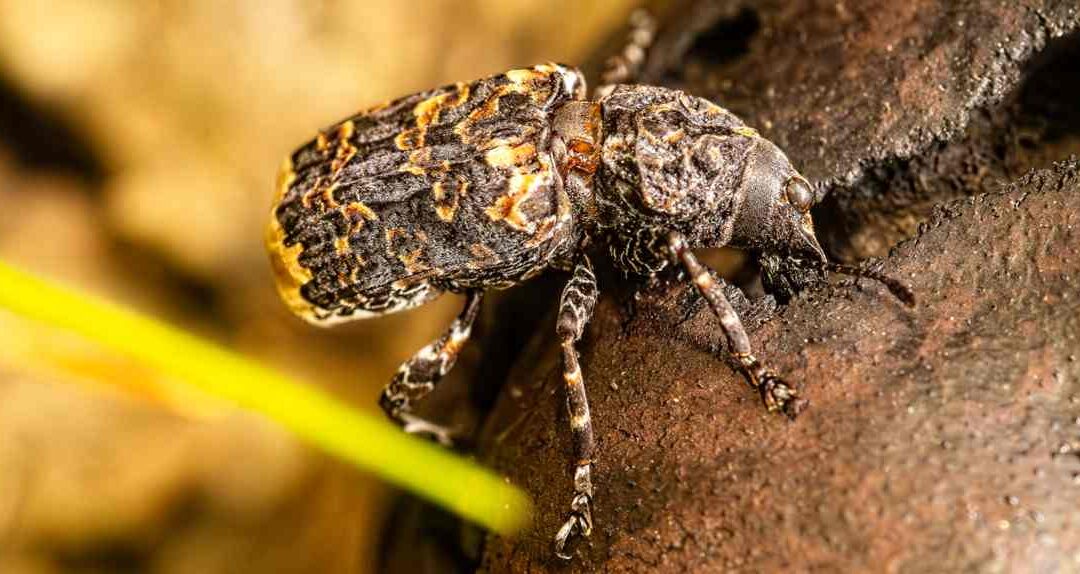
Above: Scarce Fungus Weevil on King Alfred’s Cake at Priston © Mike Williams
Leaders: Helena Crouch, Alvan White, Mike Williams and Richard Bottle
Fourteen members and guests assembled outside the Ring o’ Bells pub on a fine Spring morning, with a Red Kite circling above and a Holly Blue fluttering past. We set off along Priston Road, where the verge is prettily vegetated with a mix of native species and garden escapes. Lungwort attracted a Hairy-footed Flower Bee. Mike found Green Shieldbug, a Dark-edged Bee-fly and Dotted Bee-fly. Alvan spotted his first Early Bumblebee, with its yellow shoulders and red-painted bottom. This smallest of UK bumblebees completes its lifecycle by the beginning of July and then hibernates. A Goldcrest was heard singing.
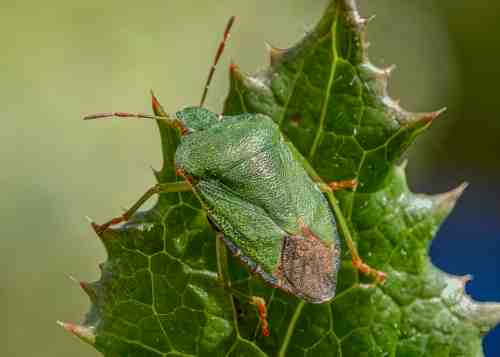
Green Shieldbug at Priston © Mike Williams
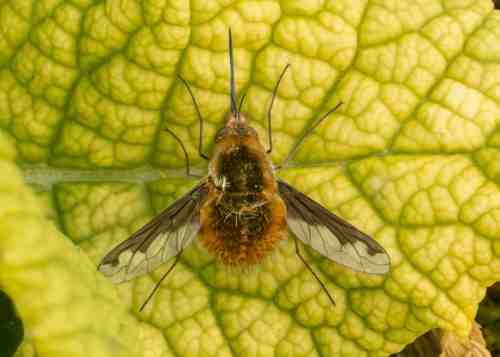
Dark-edged Bee-fly at Priston © Mike Williams
The small stream along the south side of the road was dominated by large plants of Hemlock Water-dropwort which is highly toxic to humans and livestock. We also saw Water Mint, Meadowsweet, Water Figwort and Fool’s Water-cress.
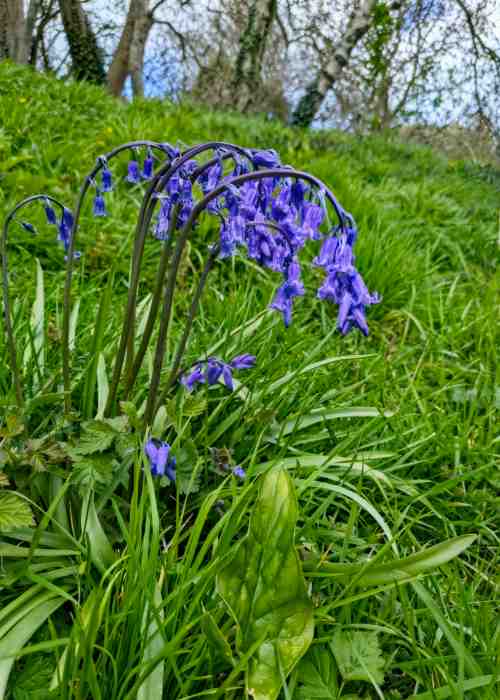
Bluebells at Priston © Helena Crouch
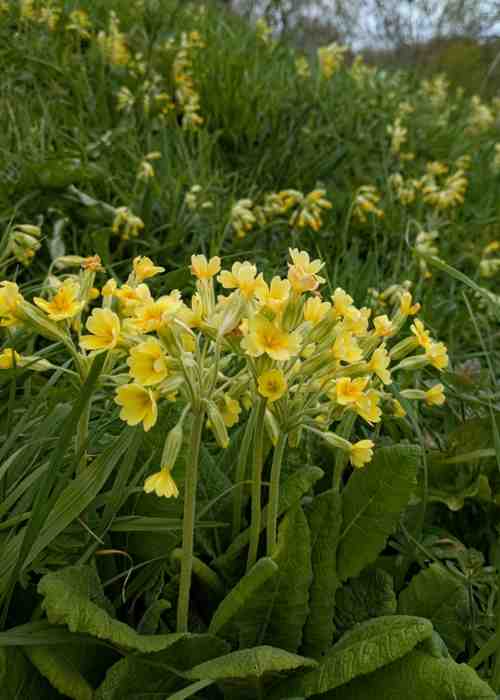
Primula x polyantha at Priston © Helena Crouch
Leaving the road, we entered an area of newly planted trees with a steep south-facing bank above, covered with Primroses, Bluebells and Cowslips. Helena pointed out a hybrid between Primrose and Cowslip (Primula x polyantha). Ground-ivy, Red Dead-nettle and White Dead-nettle were all flowering, providing a nectar source for insects, but patches of the latter had been sprayed with weedkiller.
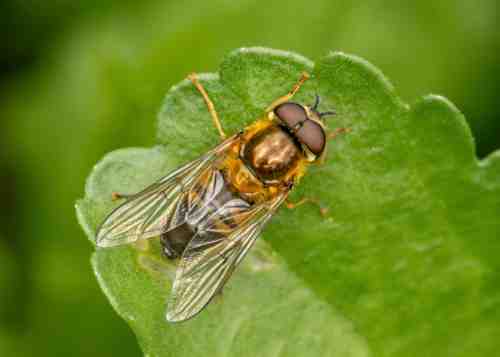
A male Epistrophe eligans at Priston © Mike Williams
Mike showed members a Batman Hoverfly, and another hoverfly, Epistrophe eligans. Meanwhile Alvan encountered an Andrena species of mining bee and Red Mason Bees, whilst Derek found a Ferruginous Bee-grabber (Sicus ferrugineus).
The females of this distinctive fly pounce on worker bumblebees, injecting an egg into their abdomen. The larvae feed inside the bee, killing it.
A much cuter find, made by Mike, was a Scarce Fungus Weevil (Platyrhinus resinosus) on a King Alfred’s Cake (Daldinia concentrica) on a tree stump. Mike explained that these are not uncommon around Bath. The previous week, Mike found an uncommon Black-headed Cardinal (Pyrochroa coccinea) on the same stump. An Orange-tip fluttered past, and a basking Comma was spotted.
We reached a small wood beside the Priston Brook, where Alvan waded in and examined the undersides of rocks for water life. Mike caught a wasp-like Nomad bee, a nest parasite of solitary bees, and explained that such organisms are indicators of a healthy, functioning ecosystem. This was a perfect spot for lunch, while Alvan paddled, finding a Mayfly larva with its three tails and some small cased caddis larvae. After lunch we returned through the wood past a glorious patch of Moschatel, or Townhall Clock, and some patches of Bath Asparagus, or Spiked Star-of-Bethlehem (Ornithogalum pyrenaicum), a speciality of the woods around Bath.
As we returned through the village, the weather suddenly deteriorated and we were pelted by hailstones then drenched by driving rain! Whilst some called it a day, others accompanied Richard to view the impressive Roman stone coffin in the church before leaving. We were grateful to Priston residents who kindly made parking available for us, and allowed us to explore their woodland.
Alvan White, Helena Crouch and Mike Williams
Recent Comments